
This past week, social media was flooded with images showing a new metro station in Tehran called the “Virgin Mary” station. The photos went viral, sparking widespread debate among those who hail it as a rare gesture of openness, those who dismiss it as a staged act to polish the regime’s image, and others who simply wonder if it even exists.
According to the posts circulating online, the “Virgin Mary” station is located on Line 6 of the Tehran metro near the St. Sarkis Armenian Cathedral.
According to France 24, the station has been under construction for 10 years. Its arched concourse and dome feature religious frescoes and artwork honoring the Virgin Mary alongside what appears to be a church, presumably the cathedral.
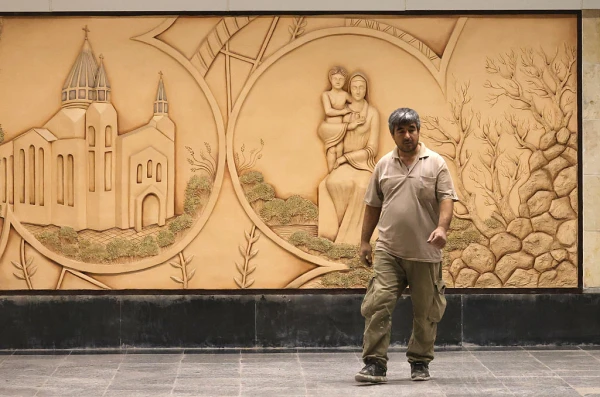
For many, the idea of a metro station in Iran named after the mother of Jesus is a surprise. Others see it as consistent with Shiite culture, which also venerates the Virgin Mary. Still others interpret it as an attempt to highlight the country’s religious diversity.
Many argue that such a move does not align with the Islamic Republic’s record in dealing with religious minorities, and some dismiss it as propaganda designed to project a more tolerant image of the regime to international audiences.
The official X account of the Iranian Embassy in Yerevan weighed in, describing the station as “a beautiful sign of coexistence between Iranians and the Armenian community.”
In reality, however, this “coexistence” falls far short of international standards on religious freedom and human rights.
}
(async function() {
const most_read_url = ‘/most-read-api’;
var historyList = document.getElementById(‘mostread-8hcWhRaO56’);
fetch(most_read_url).then((result) => {
var json_result = result.json();
json_result.then((data) => {
historyList.innerHTML = ”;
data.forEach((item, i) => {
var html = render(i, item.url, item.title);
historyList.innerHTML += html;
if ((i + 1) >= 5) {
return false;
}
});
});
}).catch((err) => {
console.error(err);
});
})();