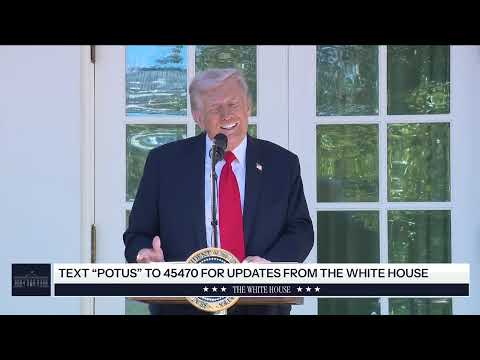
President Donald Trump delivered an unconventional speech during a Rose Garden lunch event for Republican lawmakers, creating widespread discussion about his communication style amid the ongoing federal government shutdown. The address included unusual characterizations of administration officials that drew immediate attention from both attendees and social media observers.
During the lengthy remarks, Trump assigned a Star Wars inspired nickname to Office of Management and Budget Director Russell Vought, referring to him as a pop culture villain character. The president suggested this characterization reflected Vought’s role in implementing budget cuts and policy enforcement during the current political standoff.
The president’s communication approach during the crisis has generated debate about appropriate messaging during a government shutdown that affects thousands of federal workers and essential services. Political observers noted the contrast between the serious nature of the shutdown’s impact and the unconventional tone of presidential remarks addressing the situation.
Budget director receives fictional character designation
Trump characterized Vought using the Darth Vader reference while describing his role in implementing administration budget priorities during the shutdown period. The president indicated this nickname reflected Vought’s effectiveness in pursuing conservative policy objectives and reducing what he termed Democratic spending priorities.
Vought has served as a central figure in developing and implementing the administration’s fiscal policies, including significant budget reductions affecting various federal programs. His role during the shutdown includes overseeing agency operations and managing the practical aspects of reduced government function.
The budget director has been associated with conservative policy initiatives including Project 2025, a comprehensive framework for reducing federal spending and restructuring government operations. Recent announcements have included substantial cuts to infrastructure funding, particularly affecting projects in Democratic led jurisdictions.
Government shutdown enters extended phase
The current government shutdown has reached its fourth week, creating increasing pressure on federal operations and employee welfare. Essential services continue operating while thousands of federal workers remain furloughed or working without immediate compensation during the closure period.
Military personnel, air traffic controllers, and other essential workers continue their duties despite the shutdown, with the Pentagon implementing emergency funding measures to maintain operations. The extended closure has created cascading effects across multiple government agencies and dependent services.
Trump has maintained his position that Democratic opposition is responsible for the shutdown’s continuation, despite Republican control of government institutions. The standoff centers on disagreements over budget priorities and policy provisions that both parties consider essential to their legislative objectives.
Political negotiations remain deadlocked
Senate proceedings require bipartisan cooperation to advance legislation that would reopen government operations, but fundamental disagreements prevent progress toward resolution. Democratic lawmakers have demanded inclusion of healthcare provisions, particularly protections for Affordable Care Act subsidies that were reduced in previous legislation.
The negotiation impasse reflects broader partisan divisions over government spending priorities and healthcare policy directions. Both parties have characterized their positions as defending essential services and protecting constituent interests during the prolonged closure.
Political analysts note that extended shutdowns typically create pressure for compromise as public frustration increases and economic effects expand beyond federal operations. The current situation tests both parties’ willingness to maintain their negotiating positions despite mounting practical consequences.
Public reaction reflects broader political divisions
Social media response to Trump’s remarks demonstrated the polarized nature of contemporary political discourse, with supporters and critics interpreting his comments through different frameworks. Some observers questioned the appropriateness of unconventional communication during a serious government crisis.
The president’s communication style continues generating discussion about effective leadership messaging during national challenges. Political communication experts debate whether unconventional approaches help or hinder productive political dialogue and policy resolution.
The ongoing shutdown and surrounding political rhetoric highlight the deep divisions affecting American governance and the challenges of achieving bipartisan cooperation on fundamental budget and policy questions. Resolution will likely require compromise from multiple parties willing to prioritize governance over political positioning.