
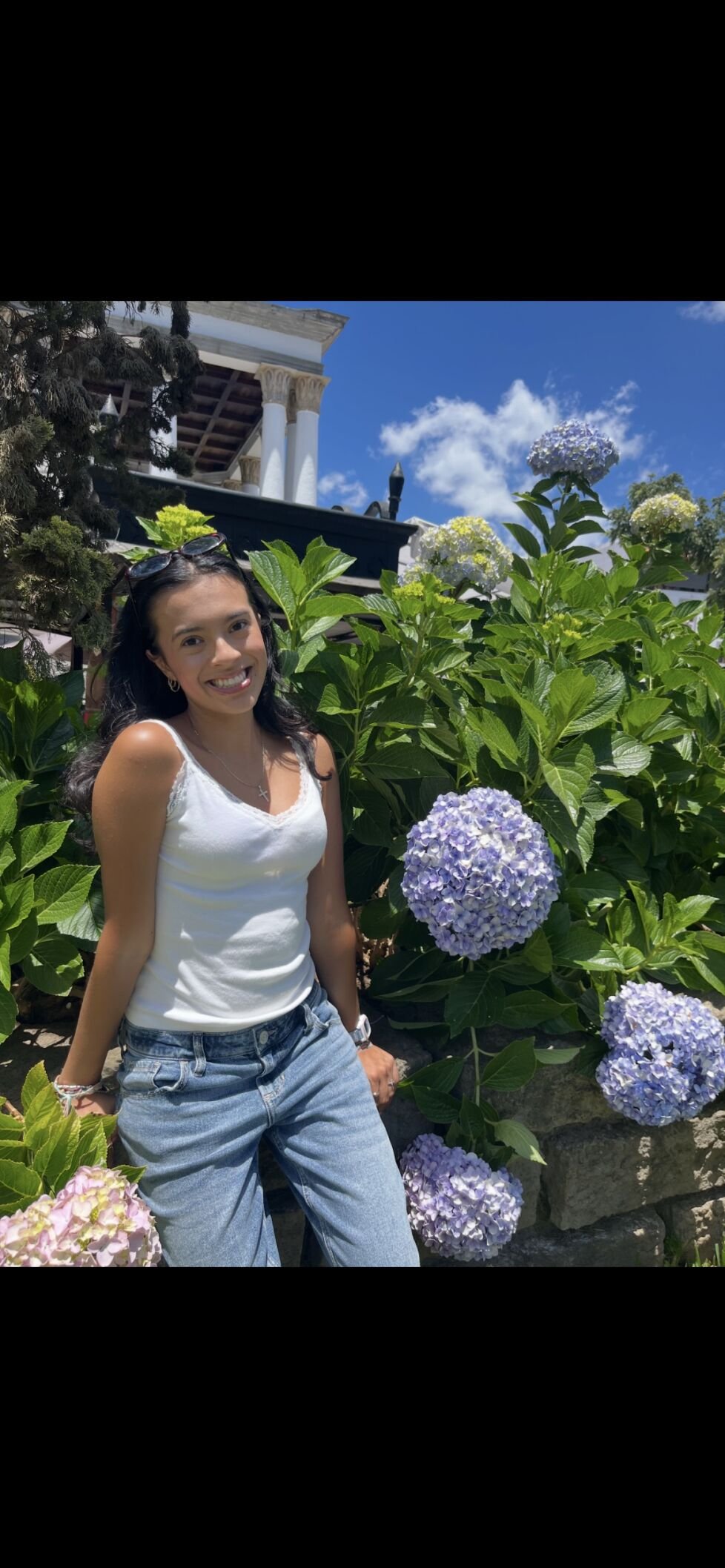
It’s hardly a secret that Allen County is home to a lively and vibrant community of Latino-Americans. For more than 100 years, individuals and families have traveled to Fort Wayne from all over Latin America – Mexico, Central and South America – in search of jobs, better educations, healthier lives and bright futures for their children.
Now, the latest American Community Survey report from the U.S. Census Bureau estimates that Allen County’s Latino population outpaced the population of Black people in 2024 for the first time. Latinos are now the largest minority group in the county, with 9.5% of the local population compared to nearly 9.2% for Black residents.
Latino community leaders point out that Latino residents are younger on average with a more robust birthrate than their counterparts.
Even amid the demographic shift, community leaders and residents say the immigration crackdown that began with President Donald Trump’s second inauguration in January has frightened the Latino community, just as it has roiled people of color in other communities across the country.
Tallying growth
The survey estimates population growth during calendar year 2024, but Census Bureau statisticians don’t count heads when they conduct community surveys each year. They use specific sets of data to build the models from which they draw their population estimates.
According to the survey, the county’s Black population declined by nearly 3,000 residents from 2023 to 2024, with 36,682 last year, only to be surpassed by the Latino population with 37,973 in 2024, an increase of 1,573 from the previous year. These numbers represent a difference of just 1,291 people, which is within the survey’s margin of error.
Rachel Blakeman, who directs Purdue Fort Wayne’s Community Research Institute, believes the Latino mini surge may be a one-time blip.
“This is a large data sample, but one year of data does not a trend make,” she said. “I want to see the 2025 numbers when they’re released in 2026. I was surprised that the Black population has declined.”
Latino population growth is outpacing all minority groups in the county, Blakeman added.
“Two ways that populations change: people move in and the population grows,” she said, “or people move out or die, and it declines.”
Increased immigration may have been a factor in Latino population growth as people move to be closer to their families or move toward better jobs and economic opportunity.
Reports of Black population decline don’t surprise the Rev. Bill McGill, pastor at Imani Baptist Church in Fort Wayne. He said young adult African Americans are leaving the Fort Wayne community.
For several years, McGill said via email, the African American community has been “losing some of its youthful energy.” Many young people “are of the opinion there is limited opportunity, and as a consequence, they feel forced into a place of obscurity. So, they change their address to relocate to markets with wider access,” he said. “They are resolved that to remain provides very little gain, but their absence creates a domino effect of critical culture drain.”
Steve Corona argues that the Latino population boomlet isn’t a glitch. A longtime member of the Fort Wayne Community Schools board, he points to the 2020 Allen County census and Latino enrollment growth as proof of increased presence in the county. Corona directs Latinos Count, a nonprofit that helps build self-confidence among Latino youth and encourages them to choose post-secondary education paths to careers and economic security.
“I don’t think it’s a glitch,” he said. “In FWCS, over the past several years, the Latino population has grown from 6% to over 20%. We’ve had over 6,000 Latino students over the past few years.”
Corona believes much of the growth was fueled by the Temporary Protected Status, or TPS, designation that President Joe Biden extended to immigrants from several troubled Caribbean and Latin American countries, including Venezuela and El Salvador, beginning in 2022.
“I’ve been talking to some of the pastors in Fort Wayne, and their congregations saw a big influx of TPS recipients,” Corona said. “I suspect that if Trump’s decision to end TPS for Venezuelans stands, we won’t continue to see that influx.”
But in the months since Trump took office, even longtime residents grapple with fear for their jobs, their homes, and the future of their families, Corona said. Department of Homeland Security and Immigration and Customs Enforcement officers moved into cities and rural communities that are home to immigrants, documented and undocumented, right after the inauguration, with the stated goal of arresting and deporting undocumented migrants. Nearly 400,000 “illegal aliens” have been deported from the United States since September, according to the most recent information on the Homeland Security website.
“This was billed as going after and deporting individuals with criminal records, but that’s not what’s happening,” Corona said. “They’ve taken into custody people with steady jobs who pay taxes and have been here for years. I’ve heard lots of anecdotal stories of people leaving for work one morning and not coming home.”
Individuals and families who receive Temporary Protected Status don’t usually choose to live in the same cities, according to Luz Ostrognai, director of Immigration Services at Catholic Charities in Fort Wayne.
Ostrognai said she doubts that Fort Wayne has an outsized number of TPS recipients. She said that while those who work with immigrants have not witnessed any immigration enforcement activity in Fort Wayne, the psychological effect on those who see themselves as potential targets can be devastating.
“It reflects a larger strategy – one that often prioritizes political signaling over consistent enforcement,” Ostrognai wrote in an emailed response to questions. “The individuals being labeled as “criminal immigrants” are rarely those with serious criminal backgrounds. Instead, the rhetoric has painted entire communities with suspicion.”
Fernando Zapari publishes the Spanish-language newspaper El Mexicano serving the Fort Wayne Latino community. He sees the newspaper’s health as one indicator that the Latino community is lively and growing.
“One in five Americans is Latino,” he said. “When you consider the current buying power, we are one of the top-five economies in the world. I came to Fort Wayne in 1978, and there were very few Latinos here then, but we’ve had huge growth.”
He said the ICE/DHS presence in Fort Wayne is less obvious for a good reason.
“This is all pretty sad,” he said. “There is fear around the country. Just because you have a dark complexion, you are a target. But Fort Wayne has been pretty quiet, and that’s also true around Indiana. Incidents happen here and there, but unless you have a criminal record, it’s not a big problem. If you pay attention to the real news, you don’t hear too much going on in the Latino community.”
DHS did not respond to requests about activity in Fort Wayne, or the number of people arrested or detained.
The Allen County Sheriff’s Department doesn’t have information on immigration enforcement in Allen County, said Sgt. Ken Litzenberg, the public relations officer. He referred any questions to DHS/ICE officials in Indianapolis.
Litzenberg said the Allen County Jail is not and never has been an ICE holding facility.
Hopeful futures
At least part of the future of Fort Wayne’s Latino community is looking for the bright side.
The oldest of four children, Sofia Vasquez was born in Rhode Island to a Guatemalan mother and a Mexican father.
“My mom came here for the first time when she was 11 and grew up going back and forth from Rhode Island to Guatemala and finally settled in Rhode Island,” she said. “She met my dad there, who came here alone when he was 18.”
Sofia and her sister Jackie Vasquez were born in Providence, but a trip to visit relatives in Fort Wayne prompted the family to move here after they fell in love with the city.
“I think the main driver for my parents was the cost of living,” she recalled. “And my mom didn’t really like Providence; it was too urban. Fort Wayne is more spread out.”
At Bishop Dwenger High School, Sofia found some of her classmates’ were not particularly welcoming to Latinos.
“I always felt empowered to be part of this community, especially given that my parents came here from other countries,” she said. “But growing up and going to Dwenger, there were not a lot of Latino kids, especially not in my honors classes. During Trump’s first term, people would say stuff like ‘Build the wall’ and that was frustrating to me.”
Sofia and Jackie both graduated from Dwenger and spread their wings. Sofia enrolled at the University of Michigan in Ann Arbor, and Jackie attends the University of Notre Dame.
A junior public policy major, Sofia finds the overall atmosphere at Michigan refreshing.
“The atmosphere here is so different; so many progressive ideas going around,” she said. “In my public policy classes, I have so much hope for my future.”
With the beginning of Trump’s second term, immigration officials and ICE swarmed over cities and rural areas – detaining and arresting both undocumented and legal immigrants.
“I haven’t had any problems being picked out for being brown, but my grandma carries her passport everywhere she goes,” Sofia said. “I don’t personally carry anything with me that I don’t normally carry. I definitely feel a lot of frustration with the system. I feel like I have to keep up with the news a lot more, but I do feel empowered to make a change.”
Even though many immigrants have lived in Allen County for generations, they are still sometimes regarded as foreigners, said Catholic Charities’ Ostrognai.
“The public narrative often overlooks the fact that immigrants and Latinos are not outsiders to Fort Wayne – they are neighbors, parishioners and essential contributors to the city’s identity,” she said. “The challenge ahead is to remind our broader community that compassion and security are not opposing goals. The true measure of a just society lies not in how it enforces its laws, but in how it treats those most vulnerable to them.”
Another child of Fort Wayne’s Latino community chose an academic route to understanding the need that makes migrants and immigrants leave their countries of birth for new lives.
Born in Mexico and raised in Kendallville and Fort Wayne, Irasema Trujillo, 24, a U.S. citizen, graduated from Snider High School and the University of Notre Dame, where she majored in political science, global affairs and Latino studies. From Notre Dame, she moved to the United Kingdom and earned a master’s degree in migration studies from Oxford University last summer.
“In a nutshell, growing up in a Latino community has been very nice,” she recalled. “In my senior year at Snider, before COVID, I started a cultural club, that has been there for a very long time. I was elected homecoming queen at Snider. For me, that was a very symbolic shift in the perception of Latinos.”
At Snider, she pushed her Latino student group to view higher education as a greater goal. At Notre Dame, she worked on a bill to allow undocumented immigrants to get driver’s licenses, which made it all the way to a hearing before an Indiana General Assembly committee. The bill failed, but Trujillo saw progress.
She returned to Fort Wayne after finishing her master’s to combine her academic expertise with the wide-ranging community organizing work she began in high school and at Notre Dame. She co-founded and is executive director at Stronger Together Unidos, which provides mentorship, scholarships and support to Latino students in Allen County.
She sees her work in the community as a vital early step toward building a scaffolding that raises Latino identity and pride to its highest level.
“I could have gone international,” she said. “It’s so important that I started my cultural outreach in Fort Wayne in all different areas – deportation, agriculture, construction, economics, health care.”
Systemic challenges
Caring for the vulnerable is Vasquez’s ultimate goal.
She plans to take a gap year after graduation and work for a law firm before enrolling in law school. Not surprisingly, Vasquez plans to practice immigration law. She said Jackie is planning for a career in medicine with the same goal of helping vulnerable immigrant communities.
“It all has to end with some kind of system change,” Sofia said. “People shouldn’t feel threatened to go outside. And it shouldn’t be so hard to get citizenship.”
However this ends, repairing the damage to the social fabric will probably take years, if not generations, Ostrognai said.
“The long-term effects will be both structural and generational,” she said. “The erosion of trust in public institutions – schools, hospitals, and even local law enforcement – creates barriers that may last for years. Children in mixed-status families are growing up in environments of fear and instability, which affects their educational outcomes, mental health and sense of belonging.”
Sofia agrees.
“It’s heartbreaking to watch this happen,” she added, “and it’s so valid that our community feels scared. Citizens can be the ones to change things. Sometimes it feels hopeless, but we still have hope.”