
What is the fastest-growing sport in the world?
Hint: It’s not pickleball.
In honor of Hispanic Heritage Month, TODAY.com is spotlighting padel — a sport that has exploded on the international scene and is growing across the U.S.
“For me, padel is a way to celebrate the strength and talent of women in sports, and to showcase the passion and pride of Latin American athletes on a global stage,” Camila Ramme Coellar, the No. 1 padel player in Mexico, tells TODAY.com.
“It’s about breaking barriers and inspiring the next generation to dream big.”
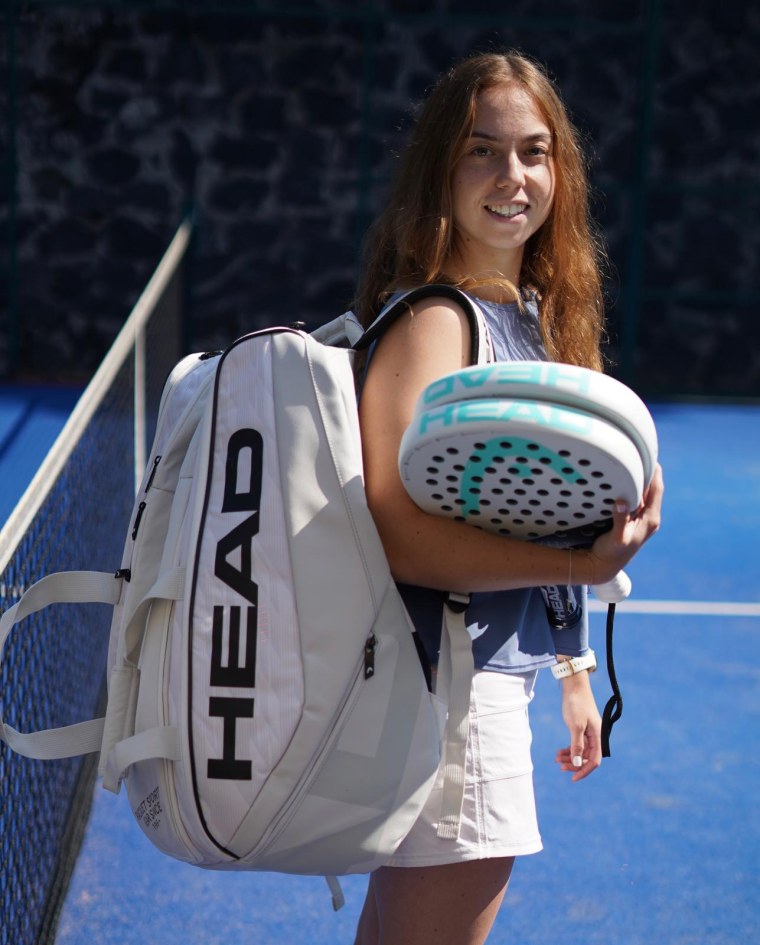
The sport celebrates strategy, quick reflexes and teamwork over pure power — making it one of the most inclusive sports today, the United States Padel Association (USPA) tells TODAY.com in a statement.
“Its social, doubles-based format makes it approachable for new players, while its strategic depth appeals to experienced athletes,” USPA adds. “Padel is the fastest-growing racquet sport in the world.”
Who Invented Padel?
“Padel was invented in Mexico City in the late 1900s and spread to Spain in the early 1970s, where it now has the largest number of players,” Jorge Jimenez, a former college tennis player from Colombia who coaches at Wynwood Padel Club in Miami, tells TODAY.com.
Many credit Enrique Corcuera in Puerto de Acapulco, Mexico, for inventing the sport in 1969.
Corcuera loved tennis but could not find enough space in his backyard for a standard size tennis court, which inspired him to build his own small court — 20 by 10 meters to be exact — except with one twist. The court was enclosed by a 3-meter wall on each side, according to the International Padel Foundation.
The same court size, roughly one-third the size of a tennis court, is used today.
Padel has quickly expanded across the world, especially in Spain and Argentina, which have some of the best players on tour, says Dhanielly Quevedo, a tennis player and Venezuela native who recently took up padel.
“It’s now quickly growing in the U.S. as one of the fastest-growing sports,” she tells TODAY.com.
Padel’s recent surge in popularity has been fueled by the establishment of professional circuits and leagues, and its inclusion in major sporting events, Marcos del Pilar, former USPA president, nicknamed the “godfather of padel,” tells TODAY.com.
How Do You Play?
The sport combines the best of tennis and squash, adding a unique twist with its enclosed court and strategic use of walls, says del Pilar.
“It’s perfect for players of all levels, offering a fun and challenging experience that emphasizes control, placement and teamwork.”
Padel balls are like tennis balls, but a padel racket is completely different. It’s made up of layers of fiberglass, with a harder racket suitable for higher-level players, Alessandro Porcu, tennis club and International Tennis Federation tournament manager for Forte Village Resort in Italy, tells TODAY.com. (Italy ranks as second only to Spain with the largest number of padel courts in the world.)
“During a match, players can use the glass sides of the court to let the ball bounce off the sides and keep it in play,” Porcu says. “After the first bounce, it can hit the side wall of the opponent’s court, but not the wire fence.”
Interest Is Spreading Across the U.S.
Santiago Gomez, who grew up in Mexico, founded Padel Haus in 2022 in Brooklyn as New York City’s first dedicated padel club.
“Padel was always part of my life, and I felt it deserved a bigger stage,” he tells TODAY.com.
“Bringing it to the U.S. was about sharing that passion and building not just courts in an empty warehouse, but a true brand and community where people connect, compete and fall in love with the game the way I did.”
Padel was first introduced in the U.S. in the 1990s through small clubs in Texas and Florida, according to the USPA.
There are now more than 100,000 amateur players in the U.S., with especially avid fans in Florida, Texas, California and New York, according to the USPA.
Padel courts and clubs are not yet available in all 50 states, but the sport is expanding quickly with over 200 clubs nationwide, and new clubs opening regularly, USPA adds.
“Florida, and Miami in particular, has become a U.S. hub for padel due to cultural ties with Spain and Latin America, favorable weather and strong local investment in facilities,” Dr. Stephen Henry from the University of Miami Sports Medicine Institute, tells TODAY.com.
Padel is also connecting women through sport, wellness and community experiences thanks to 6 Love Sports, now the largest women’s padel community in the U.S. The community boasts more than 600 active players in Miami and a growing presence in New York, San Diego, Texas, Palm Beach and South Africa.
What Are Some Health Benefits?
“Padel is a great sport, a safe, sustainable and beneficial activity for cardiovascular, muscular and metabolic health,” says Stefano Maldifassi, a sports researcher and coach at Forte Village Resort and Palazzo Fiuggi, a wellness medical spa in Italy.
The sport improves heart health because of its high-intensity intermittent activity, similar to tennis and squash, with frequent bursts of sprinting and directional changes, Henry adds.
“The softer artificial turf court is lower-impact than hard tennis courts, reducing repetitive stress on the knees, hips and spine.”
This allows professional players to enjoy longer careers compared to tennis, which is harder on the knees, Jimenez says.
Those who play padel regularly, particularly adult women between 35–55 years old, show better abdominal endurance, cardiovascular capacity, balance and lower limb strength compared to sedentary individuals, Maldifassi adds.
Quevado, 30, says she’s “at my fittest and feeling my best, thanks to a sport I didn’t know even existed until about a year ago.”
And don’t forget about the mental health benefits.
Jeniffer Da Silva, who is originally from Venezuela and now lives in Miami, loves to play padel because it reflects her culture and helps her make friends.
“It’s social, dynamic and full of energy,” she adds. “Most of all, it builds community and keeps you motivated to keep improving.”
“It’s a great cardio and coordination workout, but also a mental one: The strategy, quick decisions, and teamwork keep your mind as active as your body.”
What Are the Most Common Padel Injuries?
The most common padel injuries are due to repetitive movements, changes in direction and twisting. Maldifassi and Henry say injuries classically involve these body parts:
- Shoulder: Overhead smashes, repetitive serves and high-volume play can contribute to rotator cuff tendinopathy, bursitis and impingement syndromes.
- Elbow: “Padel elbow” is similar to tennis elbow due to frequent wrist loading and off-center hits.
- Lower limbs (knees, calves, ankles, plantar fascia): Rapid starts, stops and pivots increase risk for ankle sprains, hamstring or calf strains and kneecap pain.
- Spinal and low-back problems: Twisting and extension movements during smashes or wall rebounds may provoke lumbar muscle strains.
Muscle issues, like contractures and strains, are also common due to muscle overload, with greater risk toward the end of the match when players are fatigued, Maldifassi adds.
“Those over 35 tend to have more muscle injuries, while those under 35 have more tendinosis,” he says.
Ultimately, padel is “easy to learn but hard to master, making it a great challenge for those who love competition,” Jimenez says.
“As a true padel enthusiast, I believe it has the potential to become an Olympic sport in the future — and I’m confident its popularity will continue to grow in the coming years.”